





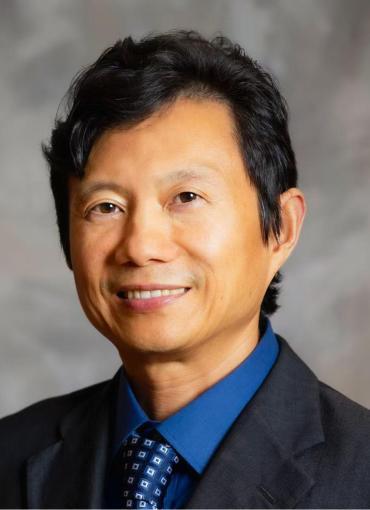
Dr. Xiao-Bing Zhang is a researcher in stem cell biology, gene editing, and gene therapy, with more than two decades of international experience spanning China, Hong Kong, and the United States. He received his BS from Sichuan University and his MS and PhD from East China University of Science and Technology. He subsequently conducted postdoctoral training at the Chinese University of Hong Kong and Fred Hutchinson Cancer Research Center before serving on the faculty of Loma Linda University and later joining the Institute of Hematology and Blood Diseases Hospital, Chinese Academy of Medical Sciences, as a full-time professor and principal investigator.
His research focuses on hematopoietic stem cell biology, induced pluripotent stem cell (iPSC) reprogramming, direct lineage conversion, CRISPR-Cas genome editing, gene therapy vector development, and safety evaluation for cell and gene therapy. He has made notable contributions to the cryopreservation and ex vivo expansion of hematopoietic stem cells, efficient generation of integration-free iPSCs from blood cells, direct reprogramming of blood cells into mesenchymal stem cells and neural stem cells, optimization of CRISPR-mediated knock-in strategies, and translational gene therapy for hemophilia A and β-thalassemia. He has also contributed substantially to long-read sequencing-based quality control and safety assessment for genome editing and viral vector products.
Dr. Zhang has published extensively in leading journals including Nature Medicine, Genome Biology, Nucleic Acids Research, Molecular Therapy, Cell Research, PNAS, and Journal of Clinical Investigation. He is the inventor or co-inventor of multiple U.S. and Chinese patents related to iPSC generation, CRISPR genome editing, gene knock-in enhancement, hemophilia A gene therapy, β-thalassemia lentiviral vectors, and gene-editing safety technologies. His work has been recognized through national talent honors, major municipal science and technology awards, and multiple international society travel awards.
PhD, Biochemical Engineering, East China University of Science and Technology, Shanghai, China, 1996–1999
MS, Bioengineering, East China University of Science and Technology, Shanghai, China, 1993–1996
BS, Biochemical Engineering, Sichuan University, Chengdu, China, 1989–1993
Leading Scientist, Cell Ecology Haihe Laboratory, 2022–
Full Professor/Principal Investigator, Institute of Hematology and Blood Diseases Hospital, Chinese Academy of Medical Sciences and Peking Union Medical College, 2021–
Adjunct Associate Professor, Loma Linda University School of Medicine, 2021–2022
Adjunct Distinguished Research Professor, Institute of Hematology and Blood Diseases Hospital, Chinese Academy of Medical Sciences and Peking Union Medical College, 2014–2021
Associate Professor, Loma Linda University School of Medicine, 2018–2020
Assistant Professor, Loma Linda University School of Medicine, 2009–2018
Staff Scientist, Fred Hutchinson Cancer Research Center, 2007–2009
Postdoctoral Fellow, Stem Cell Gene Therapy Program, Clinical Research Division, Fred Hutchinson Cancer Research Center, Seattle, WA, USA, 2002–2007
Associate Research Scientist, Stem Cell Transplantation Center, Prince of Wales Hospital, The Chinese University of Hong Kong, Hong Kong, China, 1999–2002
Assistant Researcher, State Key Laboratory of Bioreactor Engineering, East China University of Science and Technology, Shanghai, China, 1999
PRINCIPAL HONORS, AWARDS:
2024 First Prize of Tianjin Science and Technology Progress Award
2023 Technology Translation Award, Institute of Hematology, Chinese Academy of Medical Sciences
2022 Selected for the National High-Level Talent Program
2019 Scientific and Technological Innovation Award, Institute of Hematology, Chinese Academy of Medical Sciences
MAJOR NATIONAL LEADERSHIP POSITIONS, SOCIETIES AND BOARDS:
2007–Present Member, American Association for the Advancement of Science (AAAS)
2007–Present Member, International Society for Stem Cell Research (ISSCR)
2005–Present Member, American Society of Gene and Cell Therapy (ASGCT)
SELECTED PUBLICATIONS:
1. Zhang XB, Beard BC, Beebe K, Storer B, Humphries RK, Kiem HP. Differential effects of HOXB4 on nonhuman primate short- and long-term repopulating cells. PLoS Medicine 3: e173, 2006.
2. Zhang XB, Beard BC, Trobridge GD, Wood BL, Sale GE, Sud R, Humphries RK, Kiem HP: High incidence of leukemia after stem cell gene therapy in large animals with a HOXB4-expressing retroviral vector. J Clin Invest, 118(4):1502-1510, 2008.
3. Meng X, Neises A, Su RJ, Payne KJ, Ritter L, Gridley DS, Wang J, Sheng M, Lau KH, Baylink DJ, Zhang XB*: Efficient reprogramming of human cord blood CD34+ cells into induced pluripotent stem cells with OCT4 and SOX2 alone. Molecular Therapy, 2012;20(2):408-16.
4. Meng X#, Su RJ#, Baylink DJ, Neises A, Kiroyan JB, Lee W, Payne KJ, Gridley DS, Wang J, Lau KHW, Li G, Zhang XB*: Rapid and efficient reprogramming of human fetal and adult blood CD34+ cells into mesenchymal stem cells with a single factor. Cell Research. 2013, May;23(5):658-72.
5. Chen W, Baylink DJ, Brier-Jones J, Neises A, Kiroyan JB, Rundle CH, Lau KHW, Zhang XB*: PDGFB-based stem cell therapy increases bone strength in the mouse. Proc Natl Acad Sci U S A. 2015 Jul 21;112(29):E3893-900.
6. Zhang JP#, Li XL#, Li GH, Chen W, Arakaki C, Botimer GD, Baylink D, Zhang L, Wen W, Fu YW, Xu J, Chun N, Yuan W, Cheng T*, Zhang XB*. Efficient precise knockin with a double cut HDR donor after CRISPR/Cas9-mediated dsDNA cleavage. Genome Biology. 2017 Feb 20;18(1):35.
7. Li XL#, Li GH#, Fu J#, Fu YW, Zhang L, Chen WQ, Arakaki C, Zhang JP, Wen W, Botimer GD, Baylink D, Aranda L, Choi H, Bechar R, Talbot P, Sun CK*, Cheng T*, Zhang XB*. Highly-efficient genome editing via CRISPR-Cas9 in human pluripotent stem cells is achieved by BCL-XL. Nucleic Acids Research, 2018 Nov 2;46(19):10195-10215.
8. Zhang JP#, Cheng XX#, Zhao M#, Li GH#, Xu J#, Zhang F, Yin MD, Meng FY, Dai XY, Fu YW, Yang ZX, Arakaki C, Su RJ, Wen W, Wang WT, Chen W, Choi H, Wang C, Gao G, Zhang L, Cheng T*, Zhang XB*. Curing hemophilia A by NHEJ-mediated ectopic F8 insertion in the mouse. Genome Biology. 2019 Dec 16;20(1):276.
9. Fu YW#, Dai XY#, Wang WT#, Yang ZX, Zhao JJ, Zhang JP, Wen W, Zhang F, Kerby C. Oberg, Zhang L*,Cheng T*, Zhang XB*. Dynamics and competition of CRISPR–Cas9 ribonucleoproteins and AAV donor-mediated NHEJ, MMEJ and HDR editing. Nucleic Acids Research, 2021 Jan 25;49(2):969-985.
10. Zhang JP#, Yang ZX#, Zhang F#, Fu YW, Dai XY, Wen W, Zhang B, Choi H, Chen W, Brown M, Baylink D, Zhang L, Qiu H, Wang C*, Cheng T*, Zhang XB*. Sci China Life Sci. HDAC Inhibitors Improve CRISPR-Mediated HDR editing efficiency in iPSCs. 2021 Sep;64(9):1449-1462.
11. Wen W#, Quan ZJ#, Li SA#, Yang ZX, Fu YW, Zhang F, Li GH, Zhao M, Ying MD, Xu J, Zhang JP, Cheng T*, Zhang XB*. Effective control of large deletions after double-strand breaks by homology-directed repair and dsODN insertion. Genome biology. 2021 Aug 20;22(1):236.
12. Quan ZJ#, Li SA#, Yang ZX, Zhao JJ, Li GH, Zhang F, Wen W*, Cheng T*, Zhang XB*. GREPore-seq: A robust workflow to detect changes after gene editing through long-range PCR and nanopore sequencing. Genomics Proteomics Bioinformatics. 2023 Dec;21(6):1221-1236.
13. Yang Z, Fu Y, Zhao J, Zhang F, Li S, Zhao M, Wen W, Zhang L, Cheng T, Zhang J*, Zhang X*. Superior Fidelity and Distinct Editing Outcomes of SaCas9 Compared to SpCas9 in Genome Editing. Genomics Proteomics Bioinformatics. 2023 Dec;21(6):1206-1220.
14. Zhao JJ#, Tian SN#, Peng ZY#, Ren JX, Zhang YY, Li GH, Deng DH, Zhang JP*, Zhang XB*. Biomembrane-inspired lipid nanoparticles enhance CRISPR-Cas9 editing for hemophilia A. J Control Release. 2025 Aug 18:114141.
15. Wang B, Lu Z, Gao G, Mikaeiliagah E, Wang L, Yu Q, Wang Z, Hu G, Chen S, Zhang X*, Pei M*. Distinct role of perlecan in mesenchymal tissue regeneration via genetic and epigenetic modification. Chem Eng J. 2025 Mar 15;508:161103.