





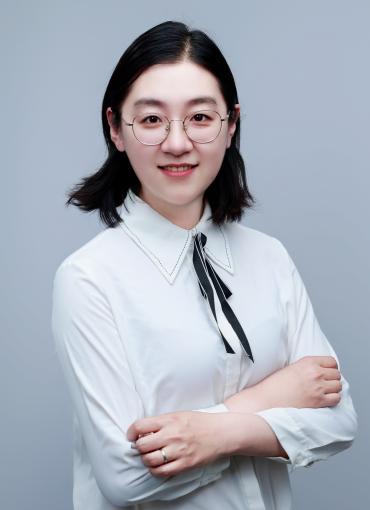
My research is at the interface of nanomedicine and cancer immunotherapy, with a primary focus on overcoming the clinical limitations of CAR-T cell therapy. While CAR-T therapy has revolutionized the treatment of hematologic malignancies, a significant proportion of patients still experience poor responses or relapse. This represents a critical bottleneck that I aim to address through innovative nanomaterial-based interventions. My lab has established preclinical models of CAR-T therapy, through which we have identified key mechanisms underlying treatment failure, discovered novel gene targets, and subsequently engineered nanomedicines and drug delivery systems designed to enhance CAR-T efficacy. My work has been published as first or corresponding author in journals including Blood, Leukemia, the Journal of the American Chemical Society, Advanced Functional Materials, and Biomaterials. These contributions were honored with the First Prize in Natural Science from Tianjin Municipality and have led to two international patents. My research has also been supported by a project from the National Natural Science Foundation of China.
Ph.D., College of Life Science, Nankai University, Tianjin, China, 2009-2014
B.S., School of Chemical Engineering and Technology, Tianjin University, Tianjin, China, 2005-2009
Principal Investigator, Institute of Hematology and Blood Diseases Hospital, Chinese Academy of Medical Sciences and Peking Union Medical College, Tianjin, China, 2021-
Staff Scientist, Department of Pathology, St. Jude Children’s Research Hospital, Memphis, TN, USA, 2019-2021
Postdoctoral Research Fellow, Department of Pathology, St. Jude Children’s Research Hospital, Memphis, TN, USA, 2014-2019
SELECTED PUBLICATIONS:
1. Zheng W, Wei J, Zebley C, Jones LL, Dhungana Y, Wang YD, Mavuluri J, Long L, Fan YP, Youngblood B, Chi H, Geiger T. (2021) Regnase-1 suppresses TCF-1+ precursor exhausted T-cell formation to limit CAR-T-cell responses against ALL. Blood, 138(2):122-135
2. Zhang X, Wang K, Gao Z, Wu Z, Liu W, Li J, Gao H, Wei J, Ding D*, Zheng W*. (2023) An Aggregation-Induced Emission Molecule-Assembled Nanovaccine with Self-Adjuvanted Function for Cancer Immunotherapy. Advanced Functional Materials, doi.org/10.1002/adfm.202302118
3. Liu W, Liu W, Zou H, Chen L, Huang W, Lv R, Xu Y, Liu H, Shi Y, Wang K, Wang Y, Xiong W, Deng S, Yi S, Sui W, Peng G, Ma Y, Wang H, Lv L, Wang J, Wei J, Qiu L, Zheng W*, Zou D*. (2024) Combinational therapy of CAR T-cell and HDT/ASCT demonstrates impressive clinical efficacy and improved CAR T-cell behavior in relapsed/refractory large B-cell lymphoma. Journal for ImmunoTherapy of Cancer, 16;12(4):e008857
4. Zheng W, O’Hear CE, Alli R, Basham JH, Abdelsamed HA, Palmer LE, Jones LL, Youngblood, Geiger TL. (2018) PI3K orchestration of the in vivo persistence of chimeric antigen receptor-modified T cells. Leukemia, 32(5):1157-1167
5. Zhang Y, Hu Z, Li X, Ding Y, Zhang Z, Zhang X, Zheng W*, Yang Z*. (2022) Amino acid sequence determines the adjuvant potency of a D-Tetra-Peptide hydrogel. Biomaterials Science, doi.org/10.1039/D2BM00263A
6. Zheng W#, Gao J#, Song L, Chen C, Guan D, Wang Z, Li Z, Kong D, Yang Z. (2013) Surface-induced hydrogelation inhibits platelet aggregation. J Am Chem Soc, 135 (1): 266–271
7. Zheng W, Wang Z, Song L, Zhao Q, Zhang J, Li D, Wang S, Han J, Zheng XL, Yang Z, Kong D. (2012) Endothelialization and patency of RGD-functionalized vascular grafts in a rabbit carotid artery model. Biomaterials, 33(10):2880-2891
8. Gao J#, Zheng W#, Zhang J, Guan D, Yang Z, Kong D, Zhao Q. (2013) Enzyme-controllable delivery of nitric oxide from a molecular hydrogel. Chem Commun (Camb), 49(80):9173-9175
9. Wang Z#, Zheng W#, Wu Y, Wang J, Zhang X, Wang K, Zhao Q, Kong D, Ke T, Li C. (2016) Differences in the performance of PCL-based vascular grafts as abdominal aorta substitutes in healthy and diabetic rats. Biomaterials Science, 4(10):1485-1492
10. Wang K#, Zheng W#, Pan Y, Ma S, Guan Y, Liu R, Zhu M, Zhou X, Zhang J, Zhao Q, Zhu Y, Wang L, Kong D. (2016) Three-Layered PCL Grafts Promoted Vascular Regeneration in a Rabbit Carotid Artery Model. Macromolecular Bioscience, 16: 608–618